How Tai Chi Helps: Tai Chi does not train rigid, static support. Instead, through slow, controlled movements, it continuously engages the deep core muscles and pelvic floor, building dynamic stability. This is like putting on a natural, flexible "muscular corset" for your lumbar spine, providing powerful support from within.
3. Increased Spinal Flexibility, Restoring Smooth Range of Motion
Common Issue: Lack of exercise, age-related degeneration (such as arthritis), or fear of movement after an injury can make the spine stiff.
How Tai Chi Helps: The gentle, flowing movements of Tai Chi guide the spine through all its natural planes of movement—flexion, extension, lateral bending, and rotation—much like gently oiling a joint. This promotes the circulation of synovial fluid, nourishing the intervertebral discs and facet joints, thereby effectively reducing stiffness.
4. Improved Shock Absorption, Promoting Disc Health
Common Issue: High-impact activities like running can jar the spine, while a sedentary lifestyle may lead to disc dehydration.
How Tai Chi Helps: Tai Chi is a low-impact exercise. Its slow, weight-shifting movements teach the body to gracefully dissipate force through the legs and core muscles, rather than transmitting shocks up the spine. Furthermore, this gentle motion acts like a pump, delivering nutrients to the intervertebral discs and maintaining their hydration and health.
5. Stress Reduction, Enabling Natural Pain Management
Common Issue: Stress and anxiety cause muscle tension (especially in the neck and shoulders), triggering a pain cycle and tension headaches. Chronic pain is a major health concern.
How Tai Chi Helps: The meditative and mindful nature of Tai Chi activates the parasympathetic nervous system ("rest and digest" mode), thereby dissolving stress-induced muscle tension. By breaking the vicious cycle of "mental stress-physical pain," Tai Chi offers an effective, non-pharmaceutical tool for managing chronic back.
Frequently Asked Questions (FAQ)
Q: I have no exercise background. Can I practice this?
A: This program uses the 'micro-movement principle,' starting with movements so small they are almost invisible to the naked eye, ensuring absolute safety.
Q: Is it suitable for people with lumbar disc herniation?
A: The centrifugal force generated by the waves can naturally create space between the vertebrae, but patients in the acute phase must follow medical advice.
International Version Special Design
1.Introducing the concept of 'spinal hydrotherapy': imagine the spine as ocean waves.
2.Combining biomechanics principles: using the 'spring theory' to explain how force is generated.
3.Integrating office scenarios: designing 'invisible exercises' that can be done quietly during meetings.
Teaching Philosophy Expressing
Eastern wisdom with Western language — explaining 'free flow of Qi' through 'ergonomics' and 'Qi follows intention' through 'neuromuscular coordination.'
"Teach Your Spine to Dance Again — From Mechanical Stiffness to Fluid Intelligence Evolution"
How to find your course:
One purchase, permanent viewing. Watch anytime, anywhere you want.
Two access methods
1. After the order is successful, we will immediately send you a confirmation email. Click on 'Go to My Course Page' in the email, log in and you can start learning!
2. Please visit our website: xiukawu.com, click on "My Courses" in the upper left menu, and log in to view your courses.
Course Consultation Add WhatsApp: +8616602302528
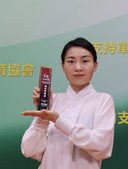
Course Video Instructor: Instructor Yiyi